The Maricopa Short Sale Process: A Step-by-Step Guide
What happens at each step, from your first call through lender approval to the closing table, written for Maricopa AZ homeowners considering a short sale.
1,300+ career closings · 267 Zillow reviews averaging 5.0 (October 2026) · Licensed in Arizona since 2002
James Sanson | Real Broker | Licensed in Arizona
Quick answer
Most Maricopa short sales close in 90 to 180 days. Commissions and closing costs usually come from the sale proceeds, and the lender's approval letter sets what, if anything, the seller contributes. Lender approval is the longest step, typically 60 to 120 days. A short sale is generally a better outcome than foreclosure for credit and future home buying. The seven-step walkthrough below covers eligibility, documentation, listing, lender review, and closing.
By James Sanson, REALTOR®. Licensed in Arizona since August 2002 and focused on the City of Maricopa since 2004. See our credentials and experience.
10 min read · Published May 15, 2026 · Updated September 29, 2026
If you are considering a short sale on your Maricopa home, the first thing worth knowing is that the Maricopa short sale process has a structure. It is not the chaos it can feel like from the outside. There are defined steps, predictable lender procedures, and a typical timeline. This page walks you through each step in plain English, from the day you decide to list to the day you close. Once you understand the process, the path forward gets clearer.
If you would rather skip the reading and talk it through, call 520-838-8037 for a confidential conversation. We have been helping Maricopa homeowners through short sales since 2004 and we can walk through your situation in 15 to 20 minutes.
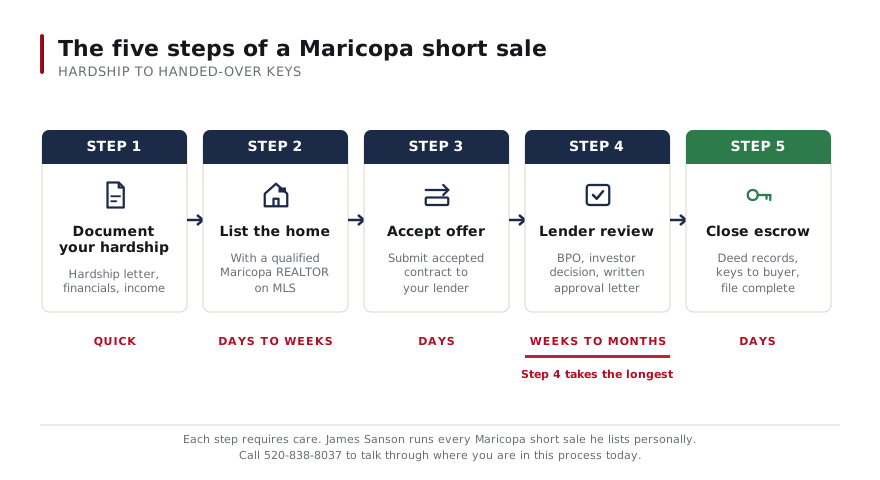
The five core stages of a Maricopa short sale, from documenting hardship through closing escrow.
What is a Maricopa short sale?
A short sale is a real estate transaction in which your mortgage lender agrees to accept less than the full balance owed on your loan as payoff from the sale of your home. The home sells to a buyer at current market value, the lender forgives or settles the remaining shortfall as part of the agreement, and you transfer ownership and move on.
Short sales exist in a specific space between other options homeowners often consider. Unlike a foreclosure, where the lender repossesses the property and resells it themselves, in a short sale you remain the seller and keep some control over timing. Unlike a deed in lieu of foreclosure, where you sign the property back to the lender, in a short sale a third-party buyer pays for the home and the lender accepts the proceeds. Unlike a loan modification, which restructures your existing loan so you keep the home, a short sale ends your ownership of the property entirely.
Lender approval is required for every short sale. Most of what makes short sales different from a standard listing happens around getting that approval. For a deeper side-by-side, see our breakdown comparing short sale and foreclosure.
Step 1: Confirm you qualify
Not every homeowner who would like a short sale will qualify. Lenders generally consider three things when evaluating eligibility: documented financial hardship, the home being worth less than the loan balance, and the homeowner's lack of significant other assets the lender could pursue to recover the shortfall.
Common qualifying hardships in Maricopa include job loss or reduced income, divorce, serious illness or injury, death of a co-borrower, military relocation, business failure, and significant payment increases after an adjustable-rate reset. Hardship needs to be ongoing and documentable, not a temporary cash crunch. A few months of overdraft fees do not make a hardship. Six months of unemployment with medical bills typically does.
Being current on your payments does not automatically disqualify you. Some lenders require you to be behind before they consider a short sale. Others will work with homeowners who can demonstrate imminent hardship while still current. It depends on your loan type, your servicer, and the documentation you can produce. The first practical step is figuring out where you stand financially, including how to calculate if you're underwater on the mortgage. If you are not sure where you stand, call 520-838-8037 and we will walk through it together.
Step 2: Gather your documents
Lenders review short sale requests through a fairly standardized package of documents. The exact list varies by lender, but most short sale applications include a hardship letter, recent pay stubs or proof of income, the last two years of tax returns, two to three months of bank statements, a statement of monthly expenses, and a list of assets and liabilities.
If you are self-employed, expect to provide profit and loss statements and additional tax documentation. If you have a second mortgage or HELOC, you will need account statements for those as well. If your hardship involves medical issues, divorce, or death of a co-borrower, supporting documents (medical bills, divorce decree, death certificate) strengthen the file.
Pulling all of this together takes time. Start early. We provide the short sale document checklist to help organize what you need before we approach the lender.
Step 3: Write your hardship letter
The hardship letter is a written statement to your lender explaining why you can no longer afford the mortgage. It is one of the most important pieces of the short sale package because it gives the lender's loss mitigation department a human story to attach to the numbers.
A good hardship letter is short (one page is typical), specific about what changed financially, honest about your inability to continue paying, and forward-looking. It does not need to be dramatic. It needs to be clear and credible. We help every short sale client draft this letter. For more guidance on structure and what to include, see how to write a hardship letter.
Step 4: List the property
Once your documentation is in order, the home goes on the market. Pricing a short sale is different from pricing a standard listing. The price needs to be defensible to the lender (close to current market value, supported by recent comparable sales) and attractive enough to draw qualified buyers in a reasonable timeframe.
The MLS listing must disclose that the property is a short sale and that any sale is subject to lender approval. This disclosure is required by Arizona Department of Real Estate rules and MLS policy. Short sale disclosures and the trustee sale process in Arizona are governed by Arizona's foreclosure statutes under Title 33 of the Arizona Revised Statutes.
Some buyers and buyer's agents will skip short sale listings entirely because of the longer timelines and uncertainty. Others actively seek them out for the potential value. Your listing agent's network and how they present the property both matter. The full sequence from listing to closing takes the property through showing, offers, lender package submission, approval, and final close.
Step 5: Negotiate with buyers
Short sale buyers come in two general flavors. Some are bargain hunters looking for a discount and willing to wait several months for lender approval. Others are owner-occupants who happen to like the home and are willing to accept the longer process. Both can work, but the offer terms matter differently for each.
Marketing time matters too. Maricopa days on market for standard listings change month to month; short sales tend to take longer to attract acceptable offers because the buyer pool is narrower. Pricing realistically from the start shortens that window.
A strong short sale offer is one the lender is likely to accept. That usually means a price near the current market value (not a lowball), a cash buyer or a fully pre-approved financed buyer, a reasonable inspection and appraisal contingency window, and patience built into the timeline. We screen offers with the lender's eventual review in mind, not just the seller's preference.
Step 6: Lender approval (the long step)
Once you have an accepted offer, the entire short sale package goes to your lender's loss mitigation department. This is the part of the process most likely to test patience. Lender approval typically takes 60 to 120 days from package submission to approval letter.
During this window, the lender will order a Broker Price Opinion or appraisal to confirm the home's value. They will review your financial documents, verify the hardship, and underwrite the proposed sale terms much like they underwrite a new loan. If the lender accepts the deal, they issue an approval letter specifying the minimum net they will accept, the closing date by which the deal must close, and any conditions.
If the lender wants different terms (a higher price, a contribution from the seller, a promissory note for part of the shortfall), there is room to negotiate. We handle this back-and-forth on your behalf. The loan type makes a real difference here: VA, FHA, conventional, and USDA loans each have different procedures. Conventional loans backed by Fannie Mae or Freddie Mac follow agency loss mitigation guidelines, while government-backed loans follow VA, FHA, or USDA program rules. For a deeper look at what happens during this step, see how lender approval works in a Maricopa short sale. During the wait, you are not on your own. Call 520-838-8037 any time for a status update.
Step 7: Close the sale
Once you have the lender's approval letter and the buyer is ready, the file moves to escrow and the standard closing process begins. The buyer completes their final loan underwriting, the title company prepares closing documents, you sign the final paperwork, and the property funds and records.
From approval letter to closing day is typically 30 to 45 days, though cash buyers can close faster. On closing day, the lender receives the agreed proceeds from the sale, you sign over the deed, and the buyer takes possession. For a detailed walk-through of the final days, see the closing timeline step by step.
How long does the whole process take?
Most Maricopa short sales take 90 to 180 days from listing to closing. The variable that drives the spread is your lender's approval timeline. A clean file with a single loan and a responsive lender can move on the faster end. A complex file with a second mortgage, missing documentation, or a slow servicer takes longer.
Common causes of delay include incomplete documentation packages (the lender pauses the review every time something is missing), BPO or appraisal disputes (the lender's value comes in higher than the offer and renegotiation is required), and buyer financing issues (the buyer's loan does not close in time and a new buyer must be found). An experienced short sale real estate agent anticipates these and intervenes early. For a deeper breakdown of how long a short sale takes, including the points that most commonly slow the process, see our timeline guide.
What does it cost the seller?
In a Maricopa short sale, the lender's written approval letter sets what, if anything, the seller pays. Real estate commissions, title and escrow fees, and most closing costs are usually paid out of the sale proceeds, with the lender approving these deductions as part of the short sale terms. The lender typically prefers to net less from the sale rather than reject standard transaction costs and lose the deal.
Exceptions exist. A second lien holder may demand a contribution from the seller to release the lien. Some loan programs require a small seller contribution toward the shortfall, especially on conventional loans. We will tell you what your specific lender is likely to require before you decide to list, so there are no surprises. The full breakdown of what a short sale costs you is on a dedicated page.
Common questions about Maricopa short sales
The questions that follow come up in nearly every initial conversation with a Maricopa homeowner considering a short sale. The answers below cover the basics. If something is missing, call 520-838-8037 and ask. If you want completely impartial advice before talking with us at all, you can request a free HUD-approved housing counselor through HUD at no cost.
Talk to Maricopa short sale specialists about your situation. We are licensed Arizona real estate agents who have walked Maricopa homeowners through this process since 2004. Call 520-838-8037 for a 15 to 20 minute conversation about what your options actually look like.
Last reviewed by James Sanson. We review this guide on a recurring basis and update for changes in lender procedures, Arizona foreclosure law, and Maricopa market conditions.
Tell us about your situation
No pressure, no obligation, no charge. James will call you back personally to discuss your options. For faster help, call 520-838-8037.
1,300+
Career Closings
267
Zillow Reviews, October 2026
22+
Years in Maricopa
5.0
Average Rating
Licensed since August 2002Maricopa focus since 2004Short sale experience since 2008
Meet the team
James personally handles every short sale listing he takes. David Hoos and David Ruiz are buyer specialists who help when our short sale listings need buyers, and David Ruiz also takes listings for sellers who prefer Spanish.
James Sanson
Listing Specialist, Lead Short Sale Negotiator
Licensed Arizona real estate agent since August 2002, focused on Maricopa since 2004. 1,300+ career closings. Built the short sale practice during the 2008-2012 downturn. Personally manages every short sale listing he takes.
David Hoos
Buyer Specialist
7 years in Maricopa. Works with buyers, including those writing offers on our short sale listings. Patient, thorough, answers the phone.
David Ruiz
Bilingual Buyer Specialist
Habla español. 8 years experience. Works with buyers across 85138 and 85139, including those writing offers on our short sale listings.
Frequently asked questions
How long does the entire short sale process take in Maricopa?
Most Maricopa short sales take 90 to 180 days from listing to closing, with the lender approval step being the longest variable. Some take longer if there are second mortgages, multiple lien holders, or complications with the lender's process. We provide updates throughout so you always know where things stand.
Do I need to be behind on payments to qualify?
Not necessarily. Some lenders require you to be behind, while others will work with homeowners who can demonstrate imminent hardship even if currently current on payments. Documentation of your hardship matters more than the specific status of your account. We can review your situation and tell you what your specific lender is likely to require.
Can the lender say no?
Yes. Lender approval is required for a short sale, and lenders can decline. Common reasons include insufficient documented hardship, the offer being too low, or the lender concluding they will recover more through foreclosure. A real estate agent experienced in short sales structures the listing, pricing, and offer package to maximize the chance of approval.
What if I have two mortgages or a HELOC?
Multiple liens add complexity but do not prevent a short sale. The second lien holder must also approve, and they typically receive a smaller payment than the first. Negotiation between the two lenders is part of the process. We have experience working with multi-lien short sales in Maricopa and can walk you through what to expect.
Will I owe taxes on the forgiven debt?
Possibly. The IRS may treat forgiven mortgage debt as taxable income. The mortgage forgiveness exclusion that began with the Mortgage Forgiveness Debt Relief Act covers debt discharged before January 1, 2026, or under a written agreement made before then, and other exclusions, such as insolvency, may still apply. We strongly recommend speaking with a licensed CPA or tax professional before completing a short sale to understand your specific tax situation.
What happens if the process stalls?
Short sales do stall, often during the lender approval phase. Common causes include missing documentation, BPO disputes, or buyer financing issues. An experienced short sale real estate agent anticipates these and intervenes early. If a deal does fall through, we re-list and start again, applying what we learned.
Is a short sale better than letting the home go to foreclosure?
In many cases, yes, but it depends on your situation. A short sale typically results in less credit damage, a shorter wait before qualifying for a new mortgage, and more control over timing. But if you have already missed the window for a successful short sale, alternatives may be more appropriate. We can help you understand which option fits your circumstances.
Talk to a Maricopa specialist today
Behind on payments or weighing your options? Call James for a confidential conversation, with no pressure and no obligation.